
Non-ribosomal peptides (NRPs) are secondary metabolites produced by microorganisms, e.g. bacteria and fungi. Unlike ribosomal protein bio-synthesis, non-ribosomal protein synthesis (NRPS) does not require mRNA. NRPs are a promising source of functional molecules such as antibiotics. The technology allows for the identification, high-throughput screening and easy purification of engineered NRPs by optical measures.
Side effects limit the radio/chemotherapeutic doses used during cancer treatment. Rocaglamide A and derivatives show strong chemo- and radioprotective efficacy, are highly specific for normal cells and do not protect p53-deficient/mutated cancer cells.
The invention describes a miRNA which interferes with glucocorticoid signalling and can therefore be used as a therapeutic target for e.g. diabesity-related metabolic disorders.
The invention identifies new mutations in the TERT promoter which qualify as diagnostic and prognostic marker.
The invention discloses an improved version of the chorionallantic membrane, for accurate quantification of metastatic cells in different organs of the chicken embryo at a high sensitivity.
The present invention comprises the use of two serum/plasma markers for stage discrimination and prediction of survival as well as treatment response in breast cancer patients. Test statistics show that these markers outperform established ones like the number of circulating tumor cells (CTCs).
The invention shows that a combination of HDAC and ALK inhibitors for tumortherapy is surprisingly synergistic and can additionally overcome single substance drug resistance.
The Mastomys mouse model is the only existing natural laboratory model to investigate PV pathogenesis and tumor development in the skin, ear, eye and tongue and could help to develop prophylactic or therapeutic approaches to prevent those lesions.
The invention discloses a device that enables bead purification and mixing of the sample without the need for moving the reaction plate from one deck position to the other and hence saving time and deck space.
The invention reveals a method, based on metylation analysis of intragenic regions of the gene DGKA, for estimating the risk of developing radiation induced fibrosis and can therefore be used for therapy planning.
The antibody of this invention is a mouse monoclonal antibody directed against SUMO176-86 recognizing SUMO1 of human, mouse, chicken and X. laevis. It is suitable for western blot and immune precipitation as well as for large-scale enrichment of SUMOylated species by IP / peptide elution.
The current technology provides the detection of DKK3 as a promising early stage marker for chronic kidney disease. DKK3 is elevated in the early morning urine and can be easily and cost-effectively determined by standard ELISA assay systems.
Ein Team von Wissenschaftlern unter Federführung des Robert Koch-Instituts hat die Wildtier-Quelle des Ebolafieber-Ausbruchs in Westafrika eingegrenzt und…
Nur bei zwei von drei neuen Unternehmen stellen Gründer einen Businessplan auf. Rund 70 % von ihnen unterschätzen ihren Finanzbedarf im Gründungsjahr. Im…
Die Qualifizierung von Fachkräften für Industrie 4.0 hat für deutsche Unternehmen höchste Priorität. Das Bundesinstitut für Berufsbildung (BIBB) wird sich…
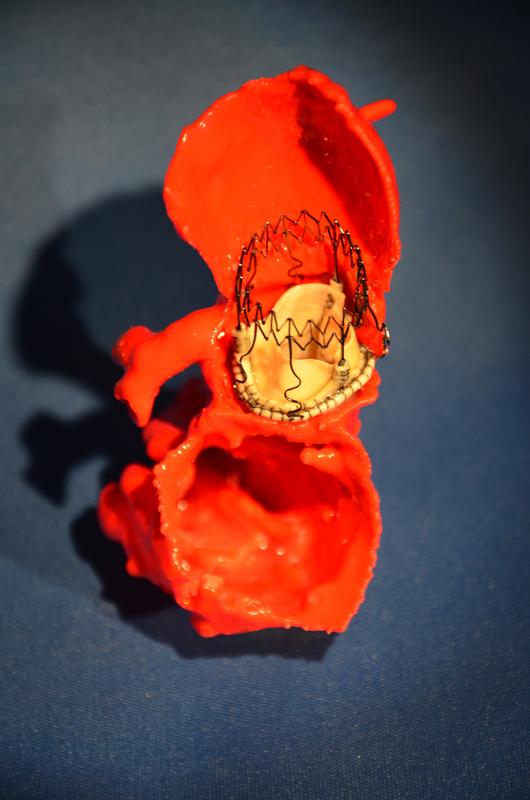
Im Vorfeld des Eingriffs haben sich die Herzchirurgen in Zusammenarbeit mit dem Helmholtz-Institut der Rheinisch-Westfälischen Technischen Hochschule (RWTH) in…
 Rückmeldung


