
Das Leibniz-Zentrum für Agrar-landschaftsforschung aus Müncheberg (Mark), das Leibniz-Institut für Pflanzengenetik und Kulturpflanzenforschung aus Gatersleben…
In diesem Projekt soll ein neues Verfahren auf Basis von Altspeisefett entwickelt werden. Die Anforderungen an die Verarbeitung dieses Rohstoffes sind groß, da…

Dem Explosionsschutz kommt eine immer größer werdende Bedeutung zu. Viele Mitarbeiter in großen Konzernen und den KMUs sehen sich vor Probleme gestellt, die…
Chronische Durchfallerkrankungen beginnen meist schon im ersten Lebensjahr und können schlimme Folgen haben – von Wachstums- und Gedeihstörungen bis zum Tod….
Für ihre Studie haben die Wissenschaftler aus Europa, Asien und Amerika das Erbgut von zehn Bienenarten verglichen, die unterschiedliche Grade an…
Es erscheint allgemein plausibel, dass es einem Kind, das schlecht geschlafen hat, schwer fällt, sich im Unterricht zu konzentrieren oder Aufgaben zu…
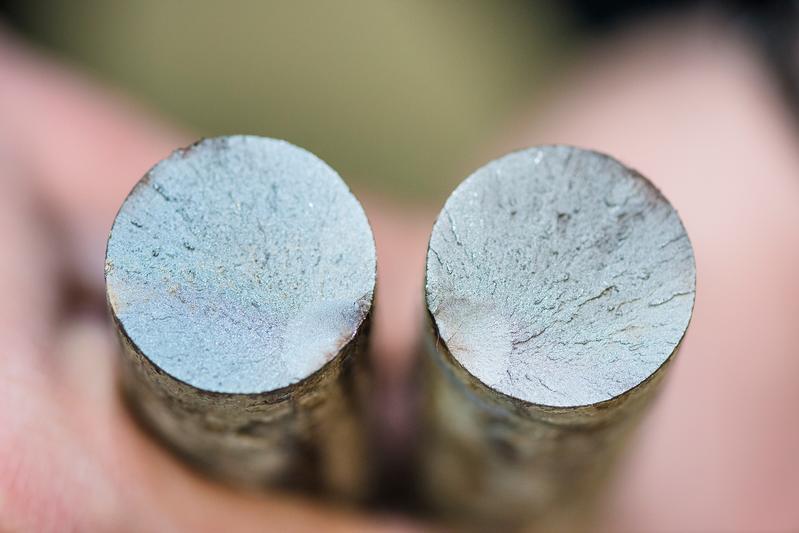
Vergleich zwischen altem und neuem Modell: 14-mal längere Lebensdauer
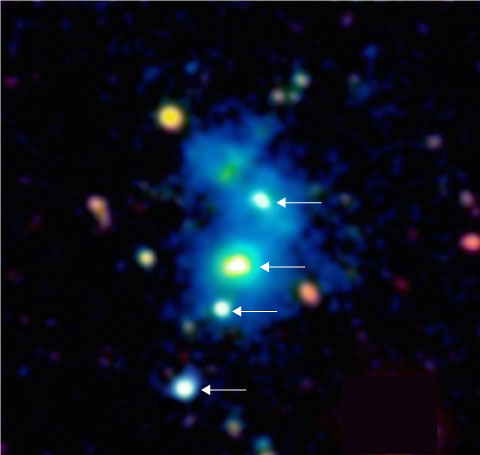
Das Quartett befindet sich in einer der massereichsten Strukturen, die je im fernen Universum nachgewiesen wurden, und ist von einem Nebel aus kaltem Gas…

Siemens bringt mit SPPA-T3000 R7.2 eine Weiterentwicklung seines Leittechniksystems für die Stromerzeugung auf den Markt, das die Schnittstelle Mensch-Maschine…
Since the pioneer work published by Takahashi & Yamanaka, the technique of reprogramming cells from a differentiated to an embryonic-like status has experienced an exploding development in regard to both techniques and applications. The most obvious application is the use in tissue regeneration. However, two key obstacles need to be overcome for clinical realization, i.e. risk of reprogrammed cells to develop neoplasiae as well as cumbersome and costly cell culture procedures. Therefore, it is imperative to develop cost-efficient methods with a lower the risk of cancer. The present invention has solved this problem by using a modification of the originally described method. Here, the transcription factors Sox2, cMyc and Klf4 are exogenously and stably expressed, whereas Oct4 is introduced with an exogenous transient expression system. This method is qualified to produce autologous neural stem cells that proliferate indefinitely and are able to re-differentiate into functional neural cells. The technology therefore applies to the tissue regeneration of neural tissue and disease modelling, especially in the central nervous system.
Chronic viral infections are characterized by a reduced responsiveness of T lymphocytes; a process also termed T cell exhaustion. The tumor necrosis factor (TNF-alpha) has been shown to be critically involved in this exhaustion process. Consequently, our invention suggests the use of anti-TNFalpha strategies, i.e. either blockade of the TNF-receptor (TNFR) binding side or its enzymatic activity by existing drugs (e.g. Infliximab, Etanercept) for the general treatment of persisting viral infections with the aim to restore T cell function. Proof for the success of this approach has been delivered by the LCMV mouse model and the treatment of HIV patients, and is in addition supported by results from studies in systems biology. There is still an unmet need for improved treatment strategies for patients suffering from persisting viral infection. As mentioned above, the effectiveness of an anti-TNF-alpha strategy has been demonstrated on the example of the LCMV model and HIV patients. It is most likely that this new therapeutic approach also applies to the broad market of persisting viral infections in general, including herpes and Hepatitis.
The development of new drugs in oncology has shifted from unspecific cytotoxic drugs to highly specific substances with known targets and modes of action. A prominent group of these target specific cancer drugs are the kinase inhibitors. The invented substances are inhibitors of the kinase AKT which is involved in several pathways regulating cell functions in cancer, e.g. survival and proliferation.
The particular novelty of the invented compounds is based on their combined covalent-allosteric binding mode. These are first-in-class modulators of AKT with a novel mode of inhibition. Covalent-allosteric inhibitors show extended drug-target residence times.
AKT is a serine/threonine kinase and oncogene that has already been identified and addressed as a target in cancer therapy by several pharma companies. The invented substances are of high interest for any pharma company with an oncology pipeline and are of special advantage for those who seek to improve, broaden or supplement their kinase inhibitor portfolio.
Die Erfindung betrifft ein Herstellungsverfahren für leichte und dennoch verschleißfeste Hybrid-Zahnräder mittels Strangpressen, Schweißen und Schmieden.

Clearstream: Geschäftsbereich 1: Verwahrung (Custody)
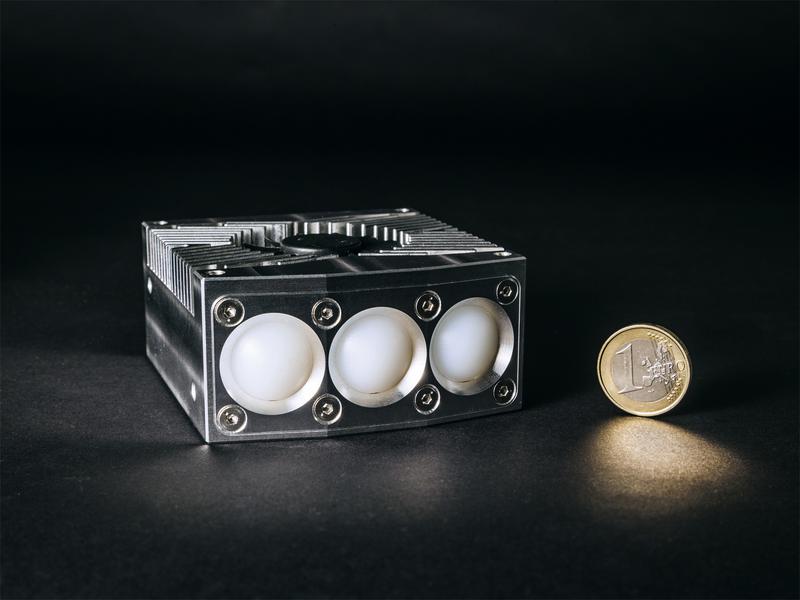
Mit Radar lassen sich aus der Distanz bei keiner oder schlechter Sicht Objekte erkennen. Dabei durchdringt Radar nicht nur Nebel, Staub und Rauch, sondern auch…

Das Fraunhofer IPA präsentiert einen neuartigen Ansatz für das Reinraum-Monitoring, mit dem Betriebsparameter wie die Einhaltung der benötigten…
 Rückmeldung


