



Forschungsergebnisse zeigen: Bupropion steigert die Libido bei Frauen, die unter vermindertem sexuellen Verlangen leiden
Brain tumours, such as those that affect glial cells, are among the most lethal of all cancers. Often, before a cure or treatment for a disease can be decided on, it is vital to understand the pathology underlying the disease. Now, scientists at New York Medical College, Valhalla, New York, USA, have identified a mechanism by which gliomas spread rapidly through brain tissue and, perhaps more importantly, drugs already exist that may be able to curb this spread.
As reported in September’s issue of Nature Medicine, Maiken Nedergaard and colleagues have discovered that glioma tumour cells release the neurotransmitter glutamate, which carves a path of destruction through brain tissue allowing the tumour cells to advance. Moreover, they found that well-known compounds, such as the NMDA (N-methyl D-asparatate) receptor antagonist MK801, are able to slow the growth of tumours implanted in the brains of adult rats.
In an accompanying News & Views article, Jeffrey Rothstein and Henry Brem of Johns Hopkins University Baltimore, Maryland, USA, discuss how these findings in rat might be extrapolated to humans with brain cancer.


Ein interdisziplinäres Forschungsteam der Universitätsmedizin Magdeburg hat neue Erkenntnisse gewonnen, wie Darmkrebs künftig individueller behandelt werden kann. In ihrer aktuellen Studie, veröffentlicht in der Fachzeitschrift Molecular Oncology, zeigen die Forschenden, dass Mini-Tumore aus Gewebe von Patientinnen und Patienten – sogenannte Organoide – genutzt werden können, um vorab zu prüfen, welche Medikamente am besten wirken. Dabei wurde ein Eiweiß identifiziert, das künftig als Biomarker für die Wahl der passenden Therapie dienen könnte. Darmkrebs zählt weltweit zu den häufigsten Krebsarten und stellt…
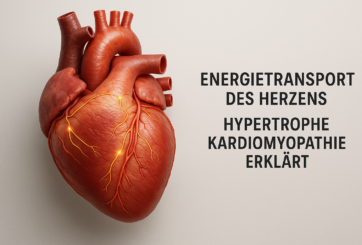
OXIDATIVER STRESS SCHALTET KREATINKINASE AN WICHTIGEN STELLEN AUS, SODASS DAS HERZ AUS DEM ENERGIEGLEICHGEWICHT KOMMTForschende aus dem Deutschen Zentrum für Herzinsuffizienz zeigen in einer internationalen, multizentrischen Studie im Journal Circulation, warum der Energietransport bei der Hypertrophen Kardiomyopathie (HCM) versagen kann und wie sich durch eine Verringerung der Herzbelastung und des oxidativen Stresses Rhythmusstörungen reduzieren lassen. Würzburg. Die hypertrophe Kardiomyopathie (HCM) ist die häufigste erblich bedingte Herzerkrankung. Sie führt dazu, dass sich die linke Herzkammer verdickt, der Herzmuskel zu stark kontrahiert…
Das Medulloblastom ist bei Kindern und Jugendlichen einer der häufigsten bösartigen Hirntumore des Zentralen Nervensystems. Etwa 70 bis 80 Prozent der Betroffenen können mit heutigen Methoden geheilt werden. Viele müssen jedoch mit schweren Langzeitfolgen der aggressiven Therapien leben. Dringend benötigt werden zielgerichtete Therapien, die nur Tumorschwachstellen angreifen und normales Gewebe verschonen. Forschende um Daniel Merk vom Hertie-Institut für klinische Hirnforschung am Universitätsklinikum Tübingen haben eine solche Schwachstelle im Erbgut einer Untergruppe des Medulloblastoms gefunden. Die Wilhelm Sander-Stiftung unterstützte das Projekt…

HZI-Studie an digitaler Kohorte zeigt Unterschiede zwischen dokumentierter und selbstberichteter Polioimpfquote Die Poliomyelitis, auch bekannt als Kinderlähmung, ist eine ansteckende Krankheit, die durch das Poliovirus verursacht wird. Durch die Entwicklung wirksamer Impfstoffe konnte das Poliovirus weit zurückgedrängt werden und war 2024 nur noch in zwei Ländern endemisch. Bis das Virus weltweit ausgerottet ist, ist aber auch in Deutschland ein Impfschutz wichtig, da das Virus jederzeit wieder eingeschleppt werden könnte. Epidemiolog:innen des Helmholtz-Zentrums für Infektionsforschung (HZI) haben nun gezeigt, dass viele…
 Rückmeldung
