



Forschungsergebnisse zeigen: Bupropion steigert die Libido bei Frauen, die unter vermindertem sexuellen Verlangen leiden
Memory could help biodegradable plastic improve stitches and implants.
Keyhole surgery might get a boost from a new shape-shifting plastic. Strong, elastic and biodegradable, it could be fashioned into thread for stitches that tighten themselves and then melt away as the body heals1.
Better still, say developers Andreas Lendlein of mnemoScience in Aachen, Germany, and Robert Langer of the Massachusetts Institute of Technology in Cambridge, USA, “large, bulky, temporary implants could be compressed and brought into the body using minimally invasive surgery and then expanded to their permanent shape on demand”.
The new plastic remembers the shape in which it was first formed. Bent or squashed into something different, it returns to its initial shape when heated.
To make their threads self-tightening, Langer and Lendlein first stretched them to up to three times their initial length. When subsequently heated to 41 oC, the threads contracted to their original length. This could pull tight a loose knot or sutures – how tight depends on how much the threads were previously stretched.
This trick, say the researchers, makes the fibres ideal for sewing incisions made during endoscopic surgery, where medical instruments are inserted and manipulated through a small cut in the skin.
Keyhole surgery minimizes scarring, speeds up healing and reduces the risk of infection. But in such a confined space, it is harder to carry out delicate manoeuvres such as stitching with just the right amount of tension. If a knot is pulled too tight, the tissues around it may die. If the suture is too loose, the incision doesn’t heal so well: scar tissue develops, which is weaker and less flexible.
Metal alloys with shape-memory have been known for some time. They are now used in dental surgery, as the ’muscles’ of some robotic devices, or in spectacle frames that regain their shape if you sit on them. Shape-memory plastics are more recent and work in a different way. Researchers at Hokkaido University in Japan reported the first one in 1995.
References


Ein interdisziplinäres Forschungsteam der Universitätsmedizin Magdeburg hat neue Erkenntnisse gewonnen, wie Darmkrebs künftig individueller behandelt werden kann. In ihrer aktuellen Studie, veröffentlicht in der Fachzeitschrift Molecular Oncology, zeigen die Forschenden, dass Mini-Tumore aus Gewebe von Patientinnen und Patienten – sogenannte Organoide – genutzt werden können, um vorab zu prüfen, welche Medikamente am besten wirken. Dabei wurde ein Eiweiß identifiziert, das künftig als Biomarker für die Wahl der passenden Therapie dienen könnte. Darmkrebs zählt weltweit zu den häufigsten Krebsarten und stellt…
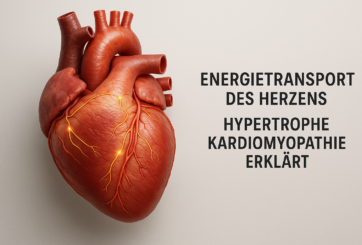
OXIDATIVER STRESS SCHALTET KREATINKINASE AN WICHTIGEN STELLEN AUS, SODASS DAS HERZ AUS DEM ENERGIEGLEICHGEWICHT KOMMTForschende aus dem Deutschen Zentrum für Herzinsuffizienz zeigen in einer internationalen, multizentrischen Studie im Journal Circulation, warum der Energietransport bei der Hypertrophen Kardiomyopathie (HCM) versagen kann und wie sich durch eine Verringerung der Herzbelastung und des oxidativen Stresses Rhythmusstörungen reduzieren lassen. Würzburg. Die hypertrophe Kardiomyopathie (HCM) ist die häufigste erblich bedingte Herzerkrankung. Sie führt dazu, dass sich die linke Herzkammer verdickt, der Herzmuskel zu stark kontrahiert…
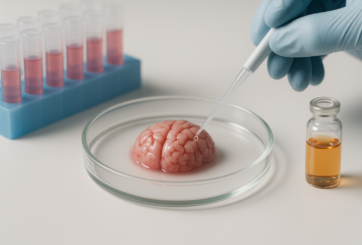
Das Medulloblastom ist bei Kindern und Jugendlichen einer der häufigsten bösartigen Hirntumore des Zentralen Nervensystems. Etwa 70 bis 80 Prozent der Betroffenen können mit heutigen Methoden geheilt werden. Viele müssen jedoch mit schweren Langzeitfolgen der aggressiven Therapien leben. Dringend benötigt werden zielgerichtete Therapien, die nur Tumorschwachstellen angreifen und normales Gewebe verschonen. Forschende um Daniel Merk vom Hertie-Institut für klinische Hirnforschung am Universitätsklinikum Tübingen haben eine solche Schwachstelle im Erbgut einer Untergruppe des Medulloblastoms gefunden. Die Wilhelm Sander-Stiftung unterstützte das Projekt…
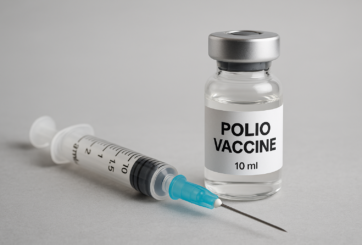
HZI-Studie an digitaler Kohorte zeigt Unterschiede zwischen dokumentierter und selbstberichteter Polioimpfquote Die Poliomyelitis, auch bekannt als Kinderlähmung, ist eine ansteckende Krankheit, die durch das Poliovirus verursacht wird. Durch die Entwicklung wirksamer Impfstoffe konnte das Poliovirus weit zurückgedrängt werden und war 2024 nur noch in zwei Ländern endemisch. Bis das Virus weltweit ausgerottet ist, ist aber auch in Deutschland ein Impfschutz wichtig, da das Virus jederzeit wieder eingeschleppt werden könnte. Epidemiolog:innen des Helmholtz-Zentrums für Infektionsforschung (HZI) haben nun gezeigt, dass viele…
 Rückmeldung
