



Forschungsergebnisse zeigen: Bupropion steigert die Libido bei Frauen, die unter vermindertem sexuellen Verlangen leiden
Eine engere und effizientere Zusammenarbeit in der Forschungspolitik ist Ziel des dritten Forums zur Deutsch-Französischen Forschungskooperation, das am heutigen Freitag in Paris stattfindet.
Die wichtigsten Akteure der Forschungspolitik beider Länder beraten in der französischen Hauptstadt über forschungspolitische Strategien zur Bewältigung gemeinsamer Herausforderungen: Schwerpunkte sind hierbei der Klimawandel, die Attraktivität der Hochschulen und Forschungszentren, die Weiterentwicklung der Forschungsinfrastrukturen, die Wechselwirkung von Wissenschaft und Wirtschaft sowie eine bessere Kooperation zwischen deutschen und französischen Forschungs- und Förderorganisationen. Professor Frieder Meyer-Krahmer, Staatssekretär im Bundesministerium für Bildung und Forschung, und die französische Ministerin für Hochschulen und Forschung Valérie Pécresse, haben den Vorsitz bei dem Treffen.
Die Vereinbarungen, die zum Abschluss des Forums zwischen dem Forschungszentrum Jülich und dem Commisariat à l'Energie Atomique (CEA), zwischen der Leibniz-Gemeinschaft und dem Institut national de la recherche agronomique (INRA) sowie zwischen der Fraunhofer-Gesellschaft und der Association des Instituts Carnot unterzeichnet werden, begründen strategische Partnerschaften. Sie umfassen insbesondere die Themen Höchstleistungsrechnen, neue Technologien im Energiesektor und den Nanowissenschaften, Sequenzierung des Weizen- und Gerstengenoms, Ernährung sowie Forschung und Entwicklung mit der Industrie.
Bundesforschungsministerin Annette Schavan und Ministerin Pécresse werden am Abend zusammen mit dem Präsidenten der Alexander von Humboldt-Stiftung, Professor Helmut Schwarz, in einer Festveranstaltung die diesjährigen Träger des deutsch-französischen Gay-Lussac-Humboldt-Preises auszeichnen. Preisträger sind: Prof. Dr. Friedhelm Bechstedt, Physik, Friedrich-Schiller-Universität Jena, Prof. Dr. Jörg Hacker, Mikrobiologie, Julius-Maximilians-Universität Würzburg, Prof. Dr. Johannes Masing, Staatsrecht, Albert-Ludwig-Universität Freiburg im Breisgau, Prof. Dr. Jörg Rüpke, Geschichte der frühen Religionen im Mittelmeerraum, Universität Erfurt, Prof. Dr. Hans-Joachim Werner, Theoretische Chemie, Universität Stuttgart, Prof. Jean Jacod, mathématiques, Université Pierre et Marie Curie – Paris 6, Prof. Patrice Pavis, études théâtrales, Université Paris 8, Prof. Clément Sanchez, chimie, Université Pierre et Marie Curie – Paris 6. In seinem 25. Jahr wird dieser Preis an hervorragende deutsche und französische Wissenschaftler verliehen, die mit ihrer exzellenten Arbeit und ihrem Engagement zur Stärkung der deutsch-französischen Forschungszusammenarbeit beigetragen haben.


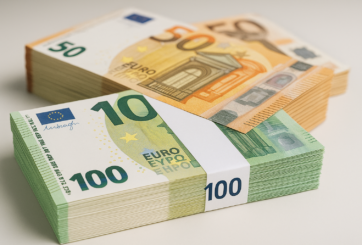
Auf dem Innovationstag Mittelstand 2025 am 5. Juni 2025 in Berlin überbrachte das Bundesministerium für Wirtschaft und Energie eine gute Nachricht: Überplanmäßige Verpflichtungsermächtigungen in Höhe von bis zu 272 Millionen Euro wurden in dieser Woche vom Haushaltsausschuss freigegeben – unter anderem zur Unterstützung der Industrieforschungsprogramme Industrielle Gemeinschaftsforschung (IGF), Zentrales Innovationsprogramm Mittelstand (ZIM) und Innovationskompetenz INNO-KOM. Auf dem Innovationstag Mittelstand 2025 am 5. Juni 2025 in Berlin überbrachte das Bundesministerium für Wirtschaft und Energie eine gute Nachricht: Überplanmäßige Verpflichtungsermächtigungen in Höhe…
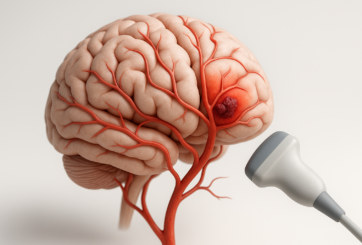
Die Würzburger Hentschel-Stiftung schreibt erneut deutschlandweit den Hentschel-Preis aus. Geehrt werden soll eine herausragende Doktorarbeit oder eine hochrangige wissenschaftliche Publikation zum Thema Schlaganfall. Die Hentschel-Stiftung „Kampf dem Schlaganfall“ mit Sitz in Würzburg fördert die Schlaganfallforschung, um die Behandlung der Betroffenen zu verbessern. Dazu schreibt sie auch in diesem Jahr wieder deutschlandweit den Hentschel-Preis aus. Er richtet sich gezielt an jüngere Forscherinnen und Forscher unter 40 Jahren. Geehrt werden soll eine herausragende Doktorarbeit oder eine hochrangige wissenschaftliche Publikation zum Thema Schlaganfall….
Nominierungen für Artikel von Wissenschaftlern in jeder Phase ihrer Karriere und aus jedem Land der Welt willkommen sind Dieser internationale Preis wurde ins Leben gerufen, um die bemerkenswertesten wissenschaftlichen Entdeckungen im biomedizinischen Bereich auszuzeichnen. Er hat sich einen wachsenden Ruf als Vorstufe zum Nobelpreis erarbeitet, da er in einer früheren Ausgabe zwei Autoren auszeichnete, die später mit dem Nobelpreis für Medizin geehrt wurden. Die vierte Ausgabe des internationalen Preises der BIAL Foundation, des BIAL Award in Biomedicine ist in vollem…

TROPHELIA Deutschland 2025: Gold für knusprigen Genuss! Team der Hochschule Bremerhaven gewinnt mit “Flexi-Nuggets” und vertritt Deutschland bei ECOTROPHELIAMit der Produktidee “Flexi-Nuggets” gewinnt das Studierenden-Team der Hochschule Bremerhaven den diesjährigen TROPHELIA-Wettbewerb. Der Ideenwettbewerb richtet sich an Studierende der Lebensmittelwissenschaften und wurde zum 16. Mal durch den Forschungskreis der Ernährungsindustrie e. V. (FEI) ausgerichtet. “Flexi-Nuggets” stehen für innovative Lebensmittel, die Nachhaltigkeit und Genuss vereinen. Sie wurden von den Studierenden der Lebensmitteltechnologie Franziska Diebel, Pauline Hoffmann und Yusuf Toprak entwickelt. Mit nur…
 Rückmeldung
