



Forschungsergebnisse zeigen: Bupropion steigert die Libido bei Frauen, die unter vermindertem sexuellen Verlangen leiden
Researchers at MIT’s Francis Bitter Magnet Lab have developed a novel magnetic semiconductor that may greatly increase the computing power and flexibility of future electronic devices while dramatically reducing their power consumption.
The work was reported in the April issue of Nature Materials.
The new material is a significant step forward in the field of spin-based electronics – or “spintronics” – where the spin state of electrons is exploited to carry, manipulate and store information. Conventional electronic circuits use only the charge state (current on or off) of an electron, but these tiny particles also have a spin direction (up or down).
Devices such as laptops and iPods already employ spintronics to store information in their super-high-capacity magnetic hard drives, but using electron spin states to process information through circuits would be a dramatic advance in computing. “We can carry information in two ways at once, and this will allow us to further reduce the size of electronic circuits,” says Jagadeesh Moodera, a senior research scientist at the Magnet Lab and leader of the research team. Today’s circuits carry information by varying the on/off state of current passed through electrons. Those same electrons could carry additional information through their spin orientation.
The magnetic semiconductor material created by Moodera’s team is indium oxide with a small amount of chromium added. It sits on top of a conventional silicon semiconductor, where it injects electrons of a given spin orientation into the semiconductor. The spin-polarized electrons then travel through the semiconductor and are read by a spin detector at the other end of the circuit.
Although the new material is promising in itself, Moodera says the real breakthrough is their demonstration that the material’s magnetic behavior depends on defects, or missing atoms (vacancies), in a periodic arrangement of atoms. This cause-and-effect relationship was uncertain before, but Moodera’s team was able to tune the material’s magnetic behavior over a wide range by controlling defects at the atomic level.
“This is what has been missing all along,” he says. “The beauty of it is that our work not only shows this magnetic semiconductor is real, but also technologically very useful.”
The new material’s ability to inject spin at room temperature and its compatibility with silicon make it particularly useful. Its optical transparency means it also could find applications in solar cells and touch panel circuitry, according to Moodera.
In addition to reducing circuit size, spintronics could create more versatile devices because electron spins can be changed reversibly (from up to down and vice versa) along circuits using an electrode gate. “We currently have multifunctional cellphones, for example, that act as phones, cameras and music players,” says Moodera. “Spintronics could create even greater multifunctionality in the future.”
Spintronics may also reduce the power consumption of information devices. Spin states are considered “nonvolatile,” meaning they retain stored information even when the power is switched off – this is why magnetic hard drives hold information without power. Spin electronics could create circuits that operate similarly, storing and passing information without the need for a continuous current to retain the data. “In such a system, we can transmit spin information without moving charges,” says Moodera. “It’s like creating a ripple in a pond – it travels all the way across without adding more energy.”
Among those assisting in the research are postdoctoral associate John Philip of the Magnet Lab and Tiffany Santos, a graduate student in the Department of Materials Science and Engineering. The research is a collaborative effort among MIT, Boise State University (Idaho) and the Korea Institute of Science and Technology (KIST), supported by the KIST-MIT project, the National Science Foundation and the Office of Naval Research. The work originally began under the Cambridge-MIT Institute.


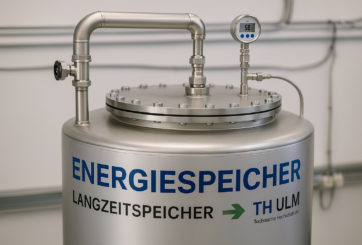
Die Technische Hochschule Ulm (THU) hat erfolgreich eine Förderung des Ministeriums für Umwelt, Klima und Energiewirtschaft Baden-Württemberg für das Forschungsprojekt „LAGER – Langzeitspeicherung in energieflexiblen, sektorintegrierten Liegenschaften und Quartieren“ eingeworben. Ziel des Projekts ist die Entwicklung, Erprobung und Demonstration von Konzepten zur langfristigen Energiespeicherung in sektorübergreifend vernetzten Energiesystemen. Das Projekt startete am 15. Oktober 2025, hat eine Laufzeit von drei Jahren und ein Gesamtvolumen von rund 2,9 Millionen Euro, wovon 2,6 Millionen Euro durch das Ministerium für Umwelt, Klima und…
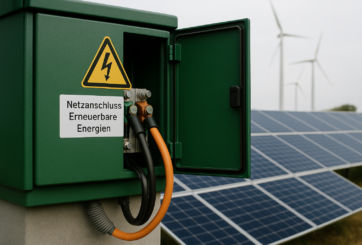
Netzbetreiber sind gesetzlich verpflichtet, Erneuerbare-Energien-Anlagen schnellstmöglich an das Stromnetz anzuschließen und die Stromeinspeisung zu ermöglichen. Doch der dafür nötige Netzausbau hinkt in Deutschland hinterher und es kommt nicht selten zu einem „Anschlussstau“. Die Stiftung Umweltenergierecht hat den Rechtsrahmen in einem neuen Bericht für die Praxis eingeordnet – inklusive der Rolle von flexiblen Netzanschlussvereinbarungen. Der Netzanschluss von Erneuerbare-Energien-Anlagen (EE-Anlagen) ist entscheidend für die Energiewende. Denn ohne Anschluss an das Netz kann kein Strom eingespeist werden. Nach dem Erneuerbare-Energien-Gesetz (EEG) sind Netzbetreiber…
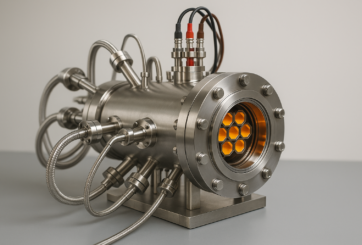
Technisch anspruchsvolle Lösungen in der Energiewirtschaft und enge Zusammenarbeit mit Unternehmen in der Region: Das zeichnet die beiden neuen EU-geförderten Transfer-Projekte zu Wasserstoff und Energienetzen der OTH Regensburg aus. Zwei Forschungsprojekte im Bereich nachhaltiger Energietechnologien werden vom Europäischen Sozialfonds Plus (ESF+) gefördert – mit einer Gesamtsumme von mehr als zwei Millionen Euro. Damit zählt die Hochschule zu den großen Gewinnerinnen der aktuellen Förderrunde des Bayerischen Wissenschaftsministeriums. Im Mittelpunkt steht der direkte Wissenstransfer: Neue wissenschaftliche Erkenntnisse sollen rasch in die Praxis…
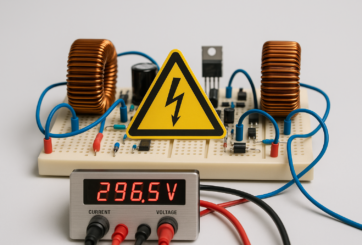
Für die Energiewende ist Deutschland auf Hochleistungsbatteriespeicher angewiesen, um auch bei Windstille und Dunkelheit Strom bereitzustellen. Doch mit der immensen Zahl einzelner Batteriezellen, die in diesen Anlagen verkabelt werden, steigen die Energieverluste. Am Fachbereich Elektrotechnik der Fachhochschule Dortmund wollen Forschende im Projekt KV-BATT diese Verluste reduzieren und erhöhen dazu die Spannung um das Zehn- bis Zwanzigfache. Ein kleiner Exkurs zurück in die Schulzeit: Die elektrische Leistung beschreibt, wie viel Energie in einer bestimmten Zeitspanne benötigt wird. Sie steht als Watt-Angabe…
 Rückmeldung
